公开观点

Zach Lloyd

Interview participant ·

1 场访谈 · 3 条观点 · 1 个话题

内容更新于:

译文仅辅助阅读;核查观点请以原始摘录为准。

按话题查看观点

按访谈日期排序的归属观点。这是相关对话的快照,而非对某人信念的最终定论。

AI产品

查看话题
AI产品

Observer agents refine skills by watching human corrections

Zach Lloyd describes self-improvement loops as essential for scaling a software factory. Observer agents watch how factory agents apply skills—and where they fail. For example, if a senior engineer corrects a code review agent’s comments, the observer uses that feedback to improve the agent’s future performance.

支持这项说法

原始摘录

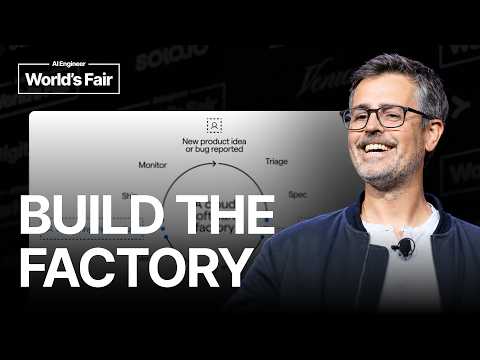
a common kinda loop that you're gonna wanna put in your factory is like a skill loop. That means you're gonna have your factory agents that are running skills, and then you'll have observer agents that are seeing how those skills are being applied, looking for issues, and trying to improve the skills.
Software Engineering Is Becoming Factory Engineering — Zach Lloyd, Warp

此片段未附更多上下文,请阅读原始访谈。

时间点来自所提供的转录稿,尚待媒体回放核对。
AI产品

Triage separates simple changes from work needing specifications

Zach Lloyd proposes implementing easy, unambiguous issues directly; harder issues should trigger specification work.

支持这项说法

原始摘录

If this is easy and this is unambiguous, just implement it,
Software Engineering Is Becoming Factory Engineering — Zach Lloyd, Warp

此片段未附更多上下文,请阅读原始访谈。

时间点来自所提供的转录稿,尚待媒体回放核对。

AI产品

Agent review can precede human review

Zach Lloyd proposes having an agent review code first—human review is then used selectively, as a risk-management step.

支持这项说法

原始摘录

I would have an agent do code review first, and then it becomes over time, like, a risk management exercise
Software Engineering Is Becoming Factory Engineering — Zach Lloyd, Warp

此片段未附更多上下文,请阅读原始访谈。

时间点来自所提供的转录稿,尚待媒体回放核对。

按访谈日期查看表达记录1

按原始访谈发布日期排列;表述不同不代表立场发生变化。