Kevin Hou argues that a product should improve as its underlying model improves—and that frontier model capabilities should be directly visible in the user experience.
支持这项说法
原始摘录
the one thing that has stood above all other lessons that I've talked, talked about is the idea of scaling with intelligence. This means that as the model gets better, so should your product. And the frontier edge of whatever model you are serving should be apparent inside of your user's product experience.
Kevin Hou describes separating agent orchestration from the IDE. He compares the relationship to that of a debugger and an IDE: the lower layer supports deeper inspection but isn’t always needed.
支持这项说法
原始摘录
We believe that the IDE is to the agent manager what the debugger was to the IDE. You don't always need a debugger, but it definitely is helpful to have it if you need to go a layer beneath and go one step deeper into that abstraction stack.
An OS-kernel demonstration used extensive agent resources
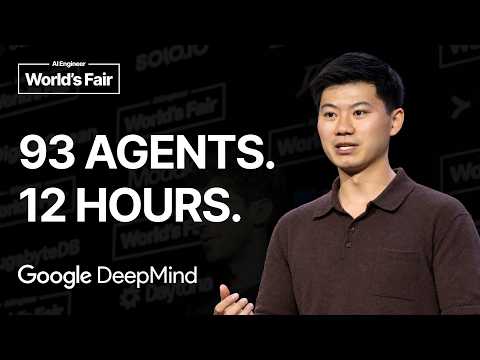
Kevin Hou reports that an OS-kernel demonstration used ninety-three sub-agents over twelve hours, fifteen thousand requests and two billion tokens, at a cost under a thousand dollars.
支持这项说法
原始摘录
it took ninety-three sub-agents over the course of twelve hours, made fifteen thousand requests, two billion tokens, and it was under a thousand dollars, which was one of the really cool aspects of this project.
 nafyi.