UN TEMA, EN CONTEXTO

AI research

Model learning, generalization, distillation, and experimental methods.

2 personas · 2 fuentes · 6 opiniones expresadas

Contenido actualizado:

Mapa de perspectivas

Explore por persona. Seleccione dos o tres para compararlas.

2 personas · 2 fuentes · 6 opiniones expresadas

Eric Nguyen

Unannotated genomic data favors unsupervised learning

Eric Nguyen says most genomic data is not annotated, making it desirable to learn from it through unsupervised methods.

Evidencia a favor

Extracto original

there's a lot more data, a lot more genomic data that's not annotated. Actually, most of it, pretty much in many ways, almost all of it is not annotated. And so being able to learn from an unsupervised manner, hugely desirable
🔬Bio-security is an AI Arms Race - Eric Nguyen (CEO, Radical Numerics)

Este fragmento no incluye más contexto. Consulta la conversación original.

La hora de inicio proviene de la transcripción proporcionada. La alineación de la reproducción está pendiente de revisión.

Abrir el episodio y buscar el momento 25:53.

Compartir informaciónVerificar esta afirmación
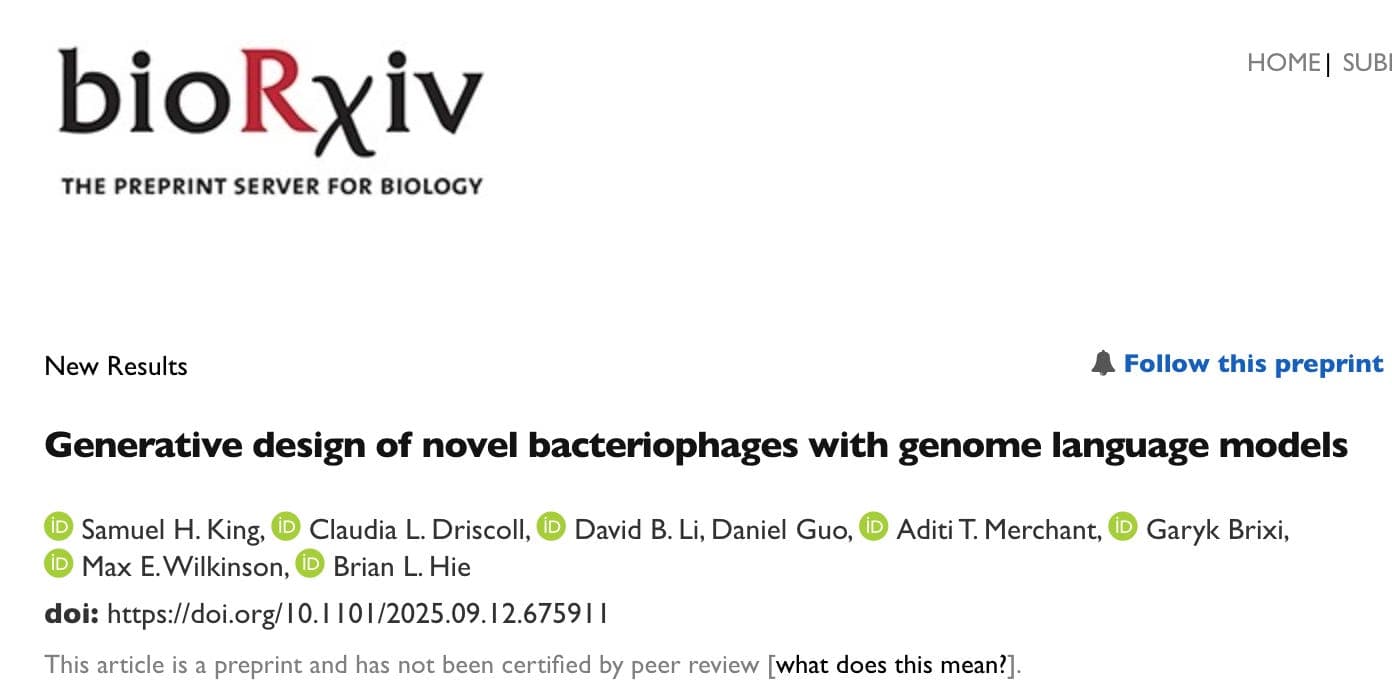
Ensemble comparisons require more than one favorable result

Eric Nguyen describes comparing his team’s work with ensemble methods that combine several approaches. He says the team did not want to select one model and simply claim to be better than it.

Evidencia a favor

Extracto original

they'll take the best methods and kind of do Do an ensemble, right? So they'll take up another, even if the best method is another previous model, they'll mix it with like an SVM and just like throw the kitchen sink at it. And so you can see why it would be the best, right? And so that was the bar for us. We're like, if they're going to throw the kitchen sink at it, like we're not going to cherry pick one model and say we're better than that.
🔬Bio-security is an AI Arms Race - Eric Nguyen (CEO, Radical Numerics)

Este fragmento no incluye más contexto. Consulta la conversación original.

La hora de inicio proviene de la transcripción proporcionada. La alineación de la reproducción está pendiente de revisión.

Abrir el episodio y buscar el momento 32:39.

Compartir informaciónVerificar esta afirmación
Promising computational results still need wet-lab validation

Eric Nguyen says wet-lab validation was in progress and had not been shown in the discussion. He regards the approach as potentially valuable if it works in the lab.

Evidencia a favor

Extracto original

We were actually in the process of validating the wet lab right now. So we didn't get to show it here, but we wanted to know, right? Actually, can it not just do this in silico, which it can, it showcased that it was able to continue And now we think this is a, you know, obviously, if this works in the lab, we think this is a hugely, hugely valuable paradigm
🔬Bio-security is an AI Arms Race - Eric Nguyen (CEO, Radical Numerics)

Este fragmento no incluye más contexto. Consulta la conversación original.

La hora de inicio proviene de la transcripción proporcionada. La alineación de la reproducción está pendiente de revisión.

Abrir el episodio y buscar el momento 36:30.

Compartir informaciónVerificar esta afirmación

John Schulman

Generalization is difficult to predict

John Schulman says the field depends heavily on generalization and that it is difficult to predict when generalization, including out-of-distribution generalization, will occur.

Evidencia a favor

Extracto original

The whole field relies a lot on generalization and it’s very hard to predict when you’re going to get generalization, or when you’re going to get some kind of out-of-distribution generalization
AI researchers debate how close we are to recursive self-improvement

Este fragmento no incluye más contexto. Consulta la conversación original.

La hora de inicio proviene de la transcripción proporcionada. La alineación de la reproducción está pendiente de revisión.

Abrir el episodio y buscar el momento 9:42.

Compartir informaciónVerificar esta afirmación

Research methods may have substantial room to improve

John Schulman suggests that clever small-scale experiments could support theories that generalize to larger experiments. He expects research methods to be far from their ceiling.

Evidencia a favor

Extracto original

If you think hard enough, you probably could have expected some of these things beforehand. There is probably some very clever way to do a small-scale experiment that’ll let you build the theory that then will generalize to the large-scale experiment. So I would expect that we’re nowhere near the ceiling of how well you can do research
AI researchers debate how close we are to recursive self-improvement

Este fragmento no incluye más contexto. Consulta la conversación original.

La hora de inicio proviene de la transcripción proporcionada. La alineación de la reproducción está pendiente de revisión.

Abrir el episodio y buscar el momento 11:34.

Compartir informaciónVerificar esta afirmación

Distillation depends on a realistic prompt distribution

John Schulman says a realistic prompt distribution can help a distilled model match a larger model. He contrasts this with easily verifiable tasks, which may produce strong benchmark results but weaker performance across a broader distribution.

Evidencia a favor

Extracto original

If you have a really good realistic prompt distribution for distillation, you can match the big model really well. But if you only have this distribution of easily verifiable tasks, then you can match the big model on all the benchmarks, but you do worse on this broader distribution
AI researchers debate how close we are to recursive self-improvement

Este fragmento no incluye más contexto. Consulta la conversación original.

La hora de inicio proviene de la transcripción proporcionada. La alineación de la reproducción está pendiente de revisión.

Abrir el episodio y buscar el momento 26:48.

Compartir informaciónVerificar esta afirmación

Estas son perspectivas individuales, no una medida de consenso. El material fuente permanece en su idioma original.